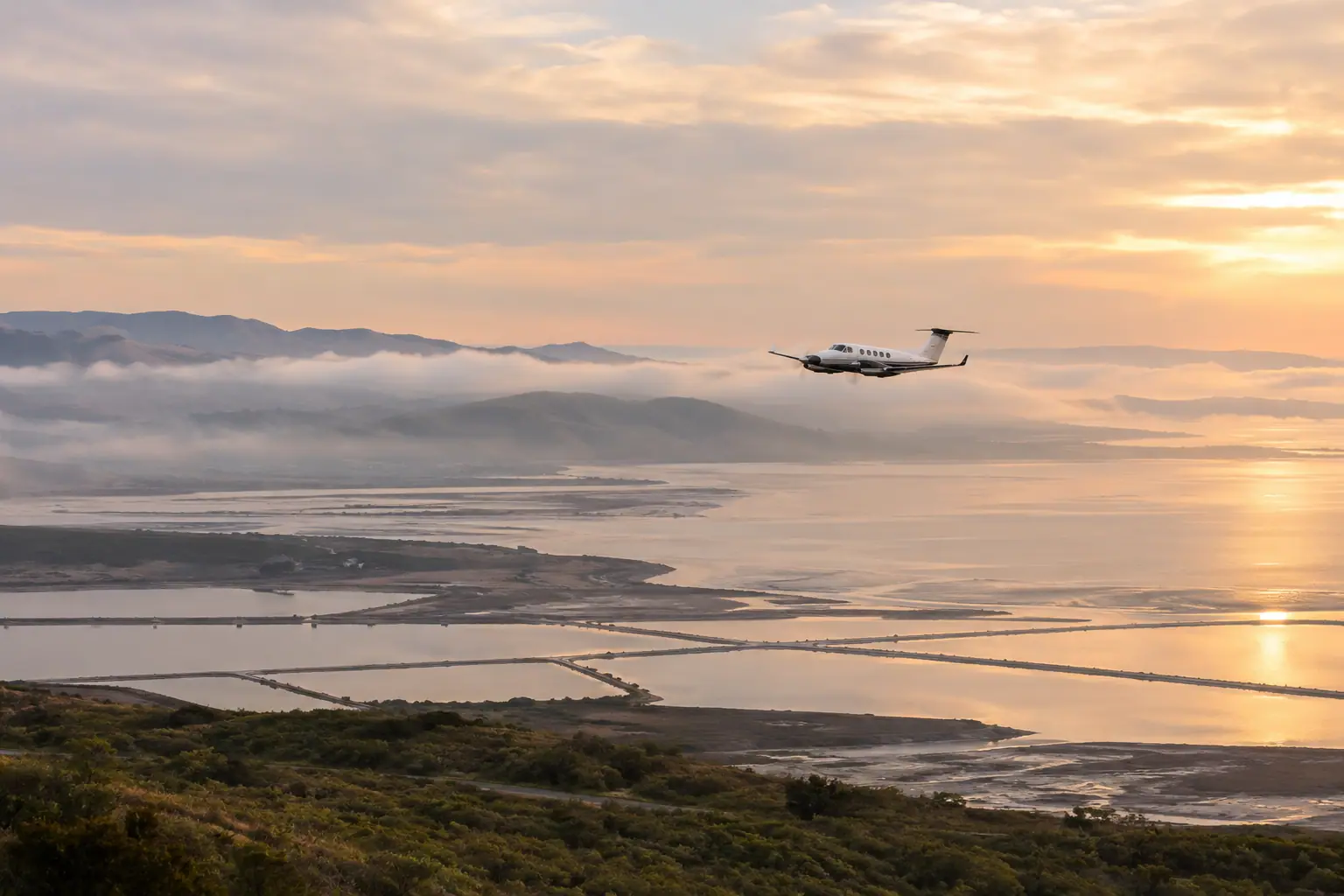
Turboprop charter cost San Francisco
Turboprop charter cost San Francisco runs about $2,200 to $3,500 per flight hour. A Los Angeles to San Francisco leg prices at $3,000 to $4,500 and takes 1 hour 18 minutes. This page explains what drives those numbers.
A turboprop price in this market is built from flight time, not distance alone. Brokers quote the hours the aircraft is booked, so a 1.3-hour hop from Los Angeles carries a smaller bill than a 6.6-hour run from Chicago even though both are single-engine-leg trips in the same class. Expect $2,200 to $3,500 per hour for the aircraft, with landing fees, overnight crew costs and de-icing added when they apply. Turboprop charter cost San Francisco depends on flight hours, crew duty time and airport fees.
The trade-off is speed against money. A turboprop cruises near 300 knots, well under jet speeds, so the longer the route the more the savings shrink against the time you lose. On short legs out of Oakland, San Jose or SFO the gap barely matters. On a transcon the math changes and we will tell you so rather than sell you the cheaper hourly rate. Twin engine turboprops hold six to eight passengers with bags and fly near 300 knots.
Rates are estimates until an operator confirms availability for your dates. We act as your agent under DOT Part 295 and place the trip with an FAA Part 135 operator that holds operational control of the flight. Ask for the full quote in writing and compare the all-in figure, not the hourly headline. Charter flights from San Francisco are priced on total hours, fees and crew days.
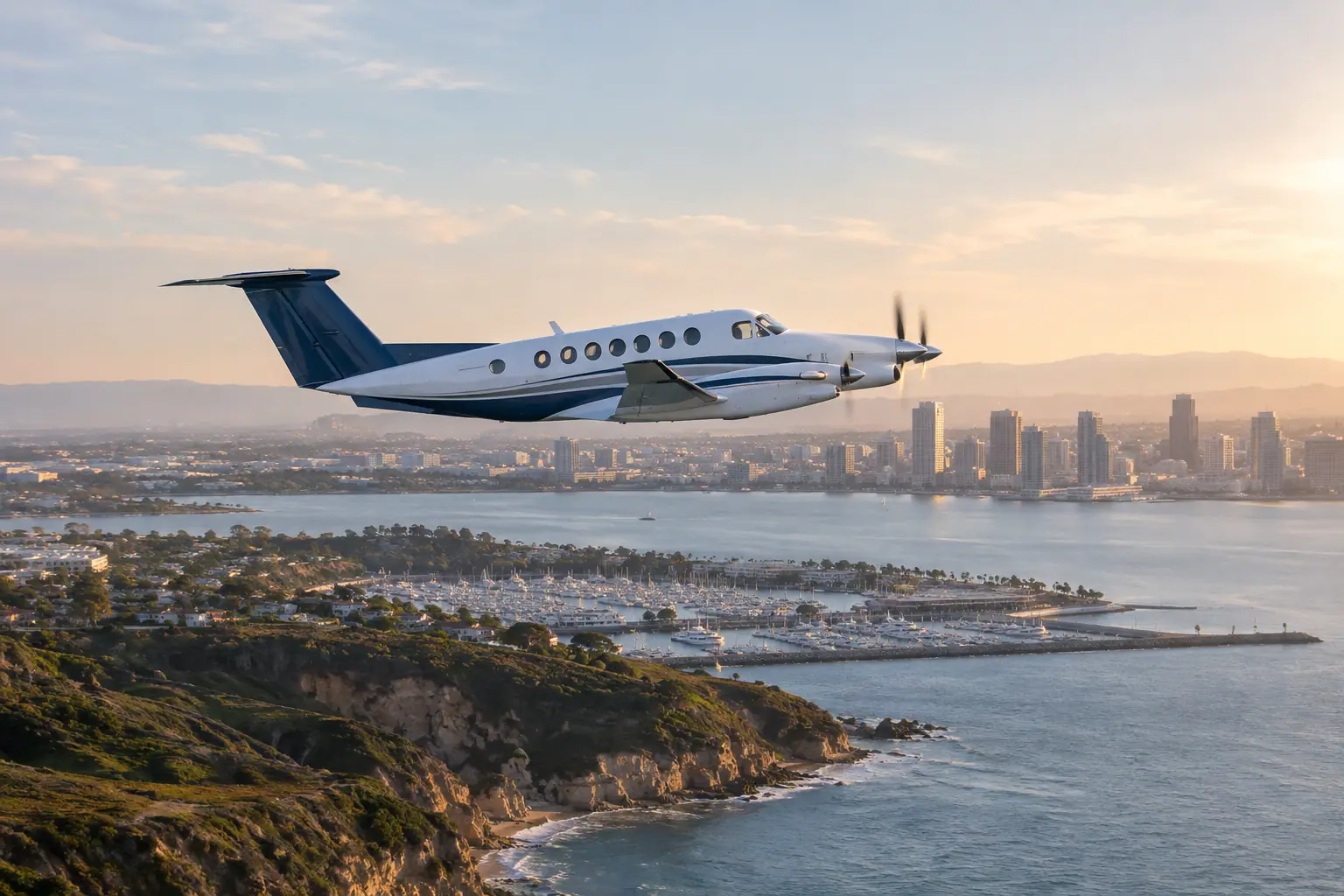
Two aircraft dominate this class locally. The King Air 350i and the Pilatus PC-12 NGX both list 1,800 nautical miles of range, which covers most of the West. Cabin size, baggage volume and runway performance separate them more than range does. Comparing charter aircraft side by side shows where the real cost difference sits. Pick the airframe around your passenger count and luggage, then let price follow.
Where you depart matters too. SFO is the headline airport, but Oakland and San Jose often shorten your drive and open more operator options. A broker who only quotes SFO is quoting a smaller market. Chartering a private turboprop from San Francisco starts with the right departure airport.
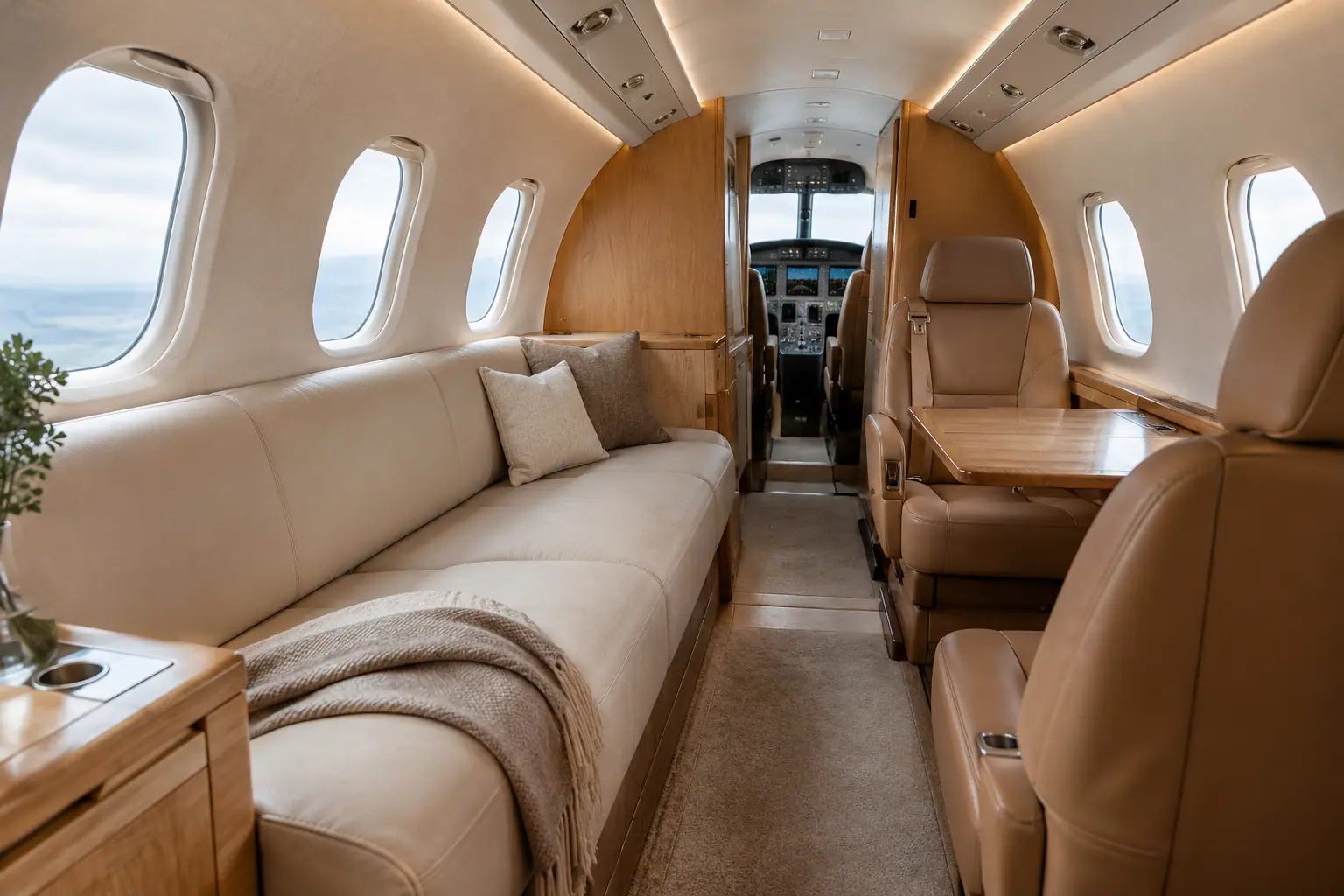
Pilatus PC-12 NGX
- 6 seats
- 290 kt cruise
- 1,800 nm range
- 40 cu ft baggage
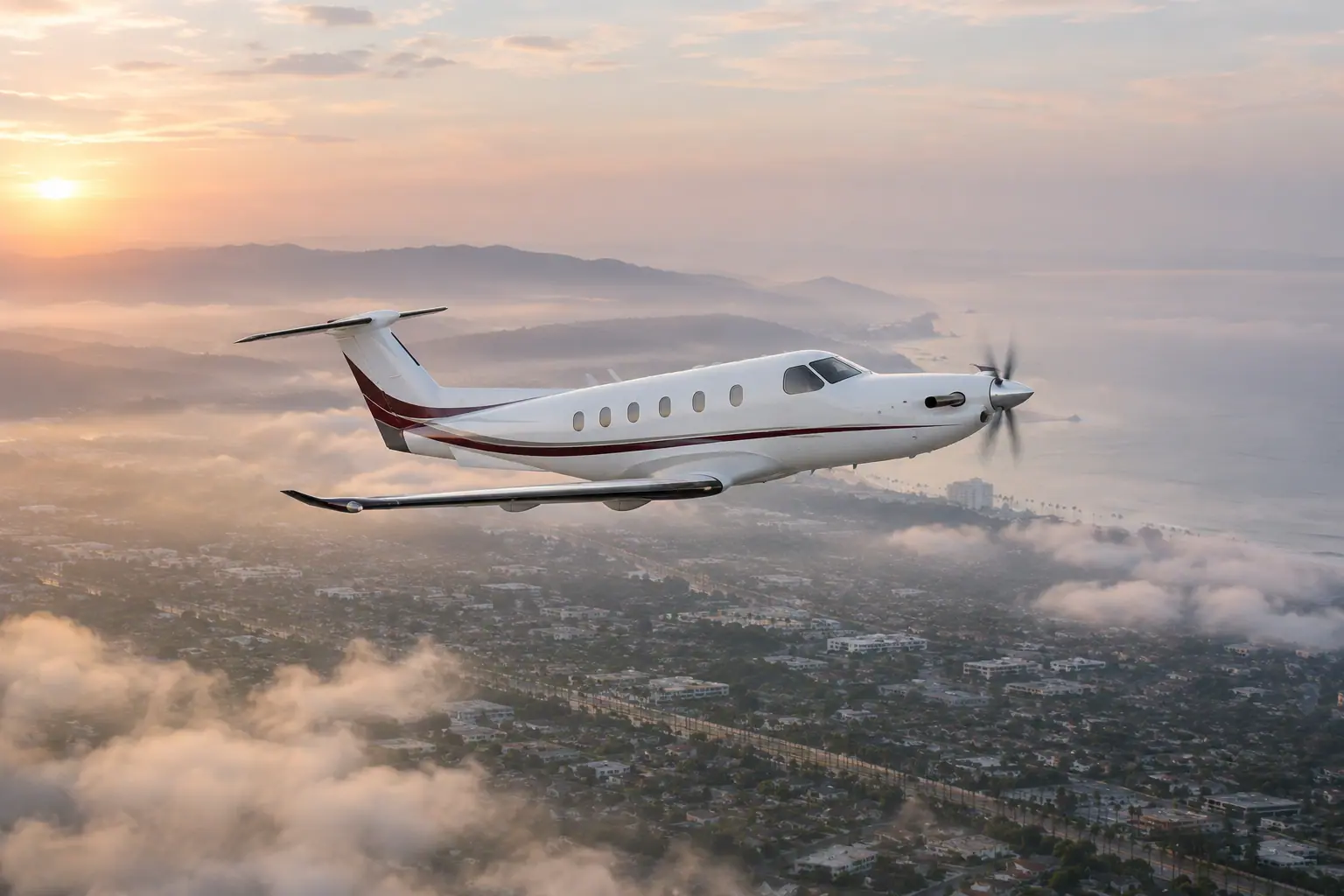
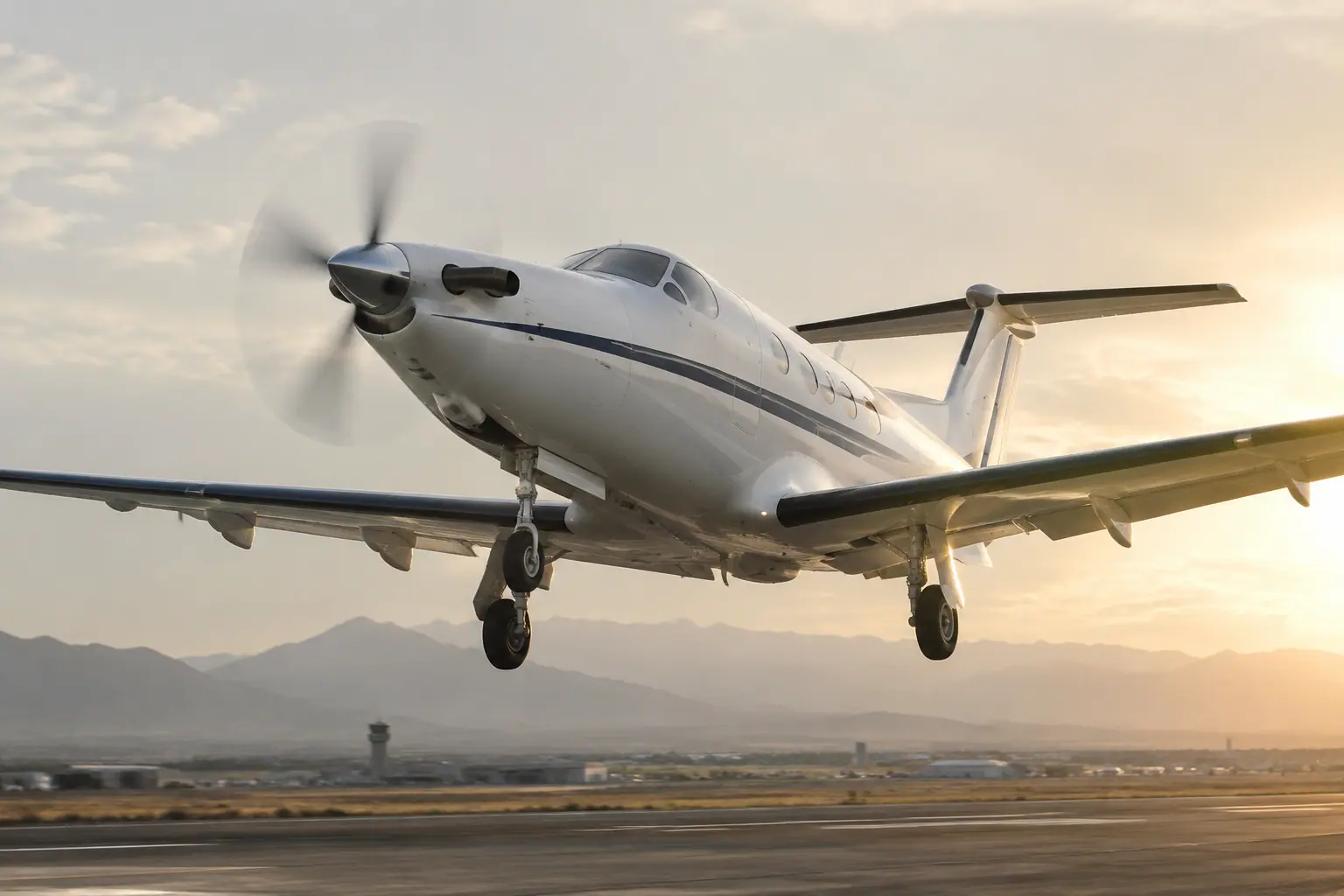
The Pilatus PC-12 NGX seats 6 at 290 knots, also with 1,800 nautical miles of range. The cabin is 4 ft 10 in tall and 16 ft 11 in long, so it is a touch taller and longer than the King Air, but baggage drops to 40 cu ft. That single-engine layout keeps operating costs down, and on the shorter Bay Area routes the speed difference is minor. It suits smaller parties traveling light who value access to smaller airports over raw cabin volume.
Daher TBM 960
- 6 seats
- 330 kt cruise
- 1,730 nm range
- 32 cu ft baggage
When a turboprop makes sense here
- Short hops under about 550 nautical miles, such as Los Angeles at 285 nm or San Diego at 374 nm, where a turboprop lands close to jet time for less money.
- Groups of six to eight travelers who would otherwise buy eight airline seats and pay for checked bags on every leg.
- Airports with short or constrained runways where a PC-12 or King Air can operate and a jet cannot, which opens smaller fields around the Bay.
- Trips where the schedule matters more than the last 60 knots of cruise speed, especially when weather or slot timing is the real constraint.
What a turboprop quote does not include
Hourly rates and route prices are estimates that exclude taxes, segment fees, international customs charges and crew overnight expenses when the trip runs past duty limits. CBP processing applies on any leg crossing a border, and those costs land on the final invoice, not the advertised hourly figure. If weather requires de-icing, that is billed separately and can be significant in winter departures from the Bay.
A turboprop is also the wrong tool beyond about 1,500 nautical miles without a fuel stop. The New York, Boston, Miami and Chicago sample fares here run 6.6 to 9.1 hours and are not nonstop, so on those routes compare jet options before committing. We will say when the turboprop is the slower, not the cheaper, answer.
Turboprop prices on popular routes
Route pricing below is per aircraft, not per seat, and covers the turboprop class in this market. Times are block estimates for the listed distances. These figures are planning numbers until an operator confirms the trip.
Turboprop charter times and prices by route
A turboprop covers these 24 routes in 10h 37m to 9h 24m, with one-way estimates from $3,000 to $37,000.
| Route | Time | One-way estimate |
|---|---|---|
| Los Angeles → San Francisco | 1h 18m | $3,000–$4,500 |
| New York → San Francisco | 8h 46m + stop | $19,500–$30,500 |
| San Diego → San Francisco | 1h 37m | $3,500–$5,500 |
| Las Vegas → San Francisco | 1h 32m | $3,500–$5,500 |
| Boston → San Francisco | 9h 08m + stop | $20,000–$32,000 |
| Phoenix → San Francisco | 2h 13m | $5,000–$8,000 |
| Miami → San Francisco | 8h 51m + stop | $19,500–$31,000 |
| Chicago → San Francisco | 6h 36m + stop | $14,500–$23,000 |
| Dallas → San Francisco | 5h 29m + stop | $12,000–$19,000 |
| Houston → San Francisco | 6h 01m + stop | $13,500–$21,000 |
| Atlanta → San Francisco | 7h 29m + stop | $16,500–$26,000 |
| Washington, DC → San Francisco | 8h 19m + stop | $18,500–$29,000 |
| Philadelphia → San Francisco | 8h 39m + stop | $19,000–$30,500 |
| Denver → San Francisco | 3h 08m | $7,000–$11,000 |
| Seattle → San Francisco | 2h 18m | $5,000–$8,000 |
| Nashville → San Francisco | 6h 58m + stop | $15,500–$24,500 |
| San Francisco → New York | 8h 46m + stop | $19,500–$30,500 |
| San Francisco → Los Angeles | 1h 18m | $3,000–$4,500 |
| San Francisco → Aspen | 2h 48m | $6,000–$10,000 |
| San Francisco → Nassau | 9h 24m + stop | $20,500–$33,000 |
| San Francisco → Cabo San Lucas | 4h 08m | $9,000–$14,500 |
| San Francisco → Turks and Caicos | 10h 37m + stop | $23,500–$37,000 |
| San Francisco → Palm Beach | 8h 48m + stop | $19,500–$31,000 |
| San Francisco → The Hamptons | 9h 03m + stop | $20,000–$31,500 |
Questions
What is the turboprop charter cost San Francisco travelers should budget per hour?
Plan on $2,200 to $3,500 per flight hour for the aircraft in this class. That band covers both the King Air 350i and PC-12 NGX across most operators. The final invoice adds landing fees, crew days and any de-icing, so budget above the hourly rate rather than at it.
How much is a turboprop flight from Los Angeles to San Francisco?
The Los Angeles to San Francisco route is 285 nautical miles and prices at $3,000 to $4,500 for the aircraft, with a block time of 1 hour 18 minutes. It is nonstop. That makes it the most common short-haul comparison against airline seats for a small group.
Is a turboprop cheaper than a jet on routes from San Francisco?
Usually on short legs, yes, because the hourly rate sits below light jet rates and the time penalty is small under about 550 nautical miles. Phoenix at 549 nm runs $5,000 to $8,000 in 2 hours 13 minutes. Beyond that the speed gap grows and jets become the better value.
How many passengers fit on a turboprop charter from San Francisco?
Six to eight passengers, depending on the airframe. The King Air 350i seats 8 with 55 cu ft of baggage, while the PC-12 NGX seats 6 with 40 cu ft. If your group is eight with luggage, the King Air is the realistic choice.
Which airports near San Francisco can a turboprop use?
SFO is the best known, but Oakland and San Jose are often quicker to reach and give more operator options. Turboprops also open smaller fields with shorter runways that jets cannot use, which is one reason groups choose them for regional trips around California.
Are turboprops practical for a New York to San Francisco charter?
They can fly it, but not nonstop. The 2,205 nautical mile route runs 8 hours 46 minutes with a fuel stop and prices at $19,500 to $30,500. At that distance a jet saves hours for similar or better money, so we would steer you there.