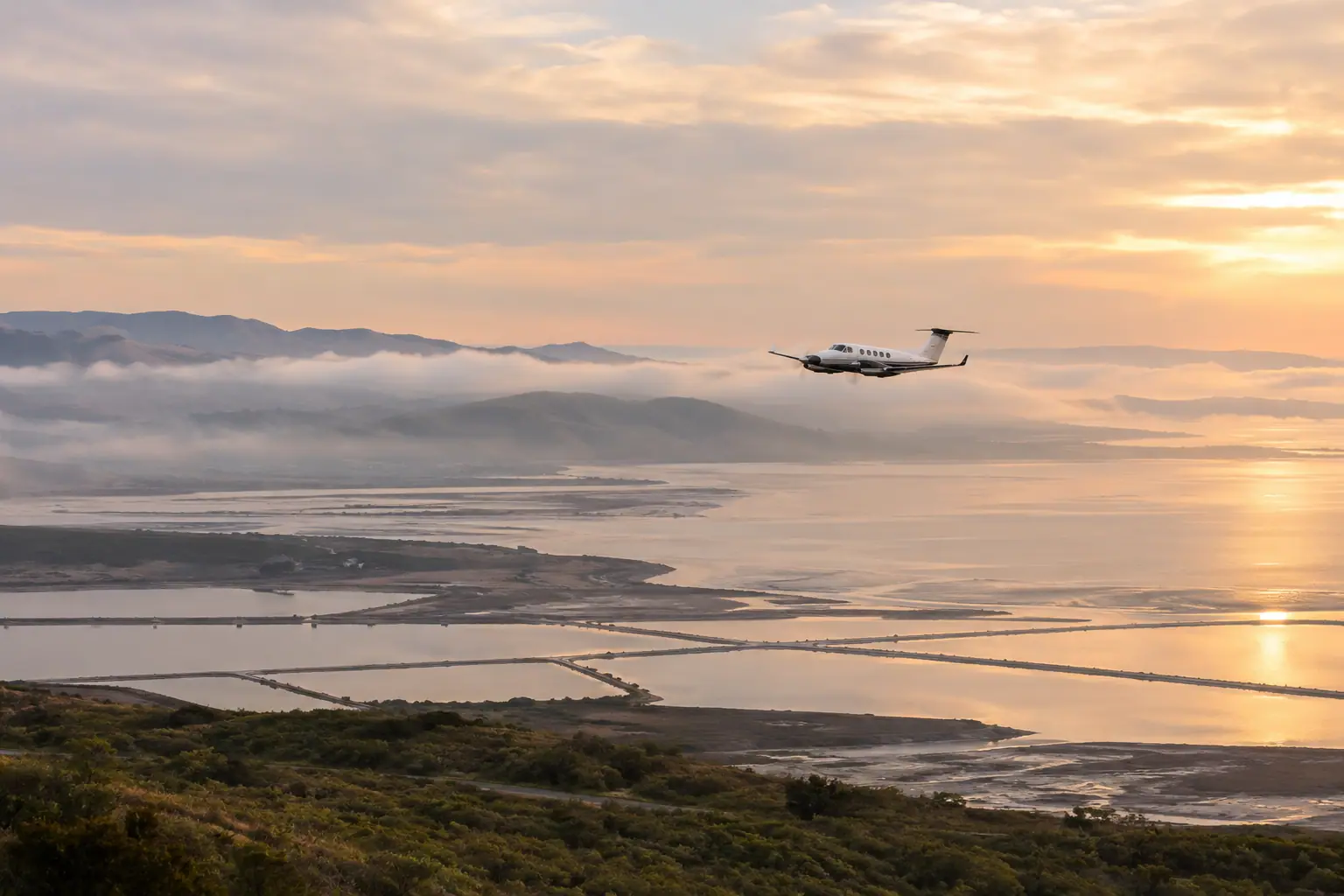
Private jet San Francisco to Los Angeles
A private jet San Francisco to Los Angeles trip runs 285 nautical miles. A turboprop flies it in about 1h 18m for an estimated $3,000 to $4,500. The real decisions are airport choice and the return leg. On a 285 nm hop, class matters less than FBO choice and crew duty limits.
San Francisco to Los Angeles private jet prices by aircraft
A private jet flying San Francisco to Los Angeles travels 285 nautical miles on a turboprop in 1h 18m, with an estimated one-way cost of $3,000–$4,500.The five classes below all fly this leg nonstop. Times are airborne, not door to door, and prices are estimates rather than firm quotes. Read the turboprop and light jet lines first, because the differences among the faster classes are minutes, not hours, while the price spreads are real money.
| Aircraft class | Flight time | One-way estimate | Notes |
|---|---|---|---|
| Turboprop | 1h 18m | $3,000–$4,500 | Best fit |
| Light jet | 1h 00m | $4,000–$6,000 | Nonstop |
| Midsize jet | 0h 59m | $5,000–$8,000 | Nonstop |
| Super-midsize jet | 0h 56m | $7,000–$10,000 | Nonstop |
| Heavy jet | 0h 56m | $9,500–$14,500 | Nonstop |
Estimates per aircraft, not per seat, excluding federal excise tax and segment fees. Time covers taxi, climb and descent.
Why a turboprop fits this trip
For 285 nautical miles, a turboprop is the class that fits. The Beechcraft King Air 350i seats eight and cruises at 312 knots, which puts Los Angeles about 1h 18m away for an estimated $3,000 to $4,500. You trade a little cabin height and speed for the lowest trip cost on this route. A light jet flies the leg in 1h 00m at roughly $4,000 to $6,000, and that is the step up most travelers take when they want a jet cabin and a faster cruise.
Above that, midsize, super-midsize and heavy jets save under half an hour against a light jet and cost considerably more. On a short hop the aircraft spends little time at cruise, so much of what you pay for in a bigger cabin is space on the ground and in the climb, not speed. If the trip is four people with weekend bags, the turboprop does the job.
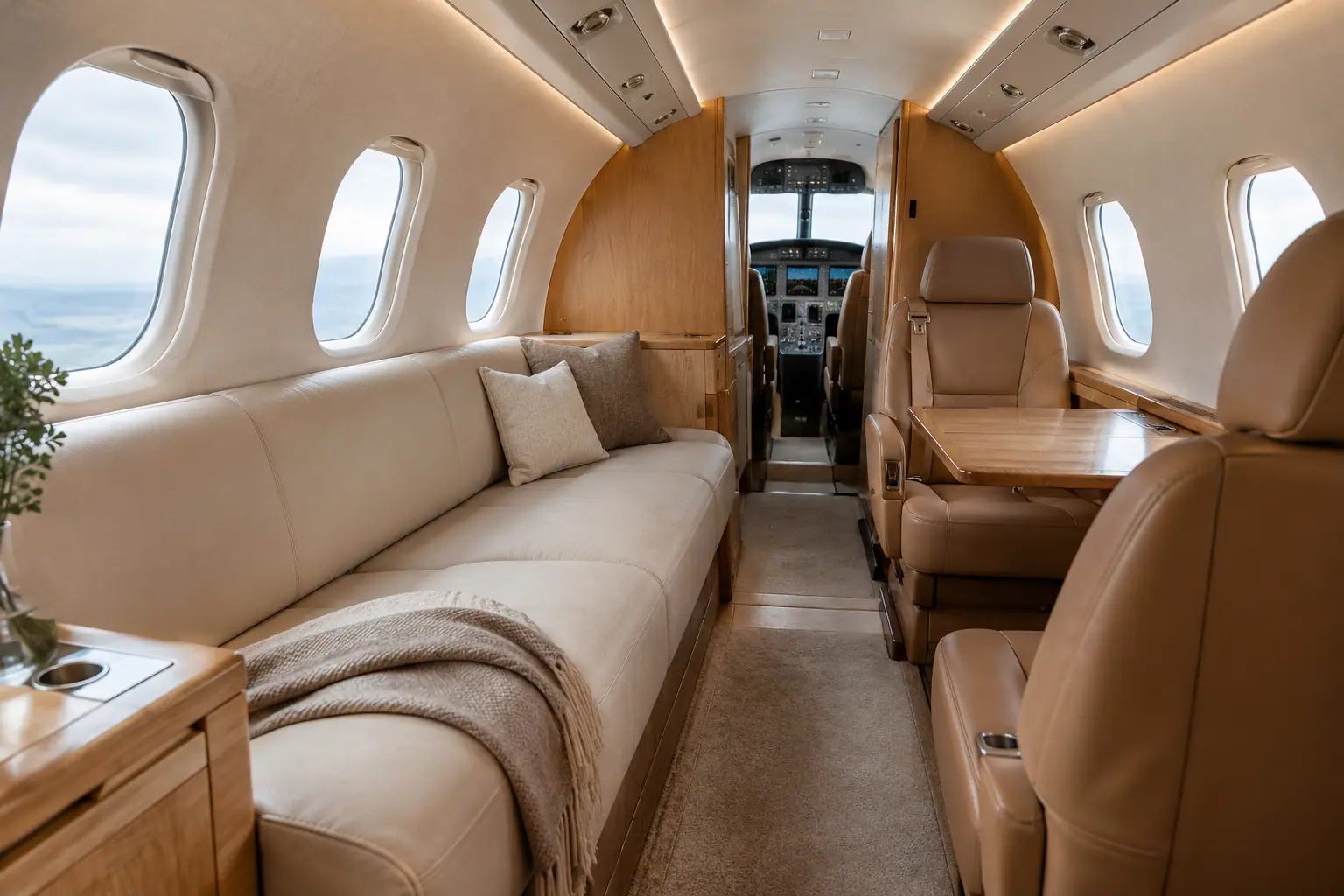
Pilatus PC-12 NGX
- 6 seats
- 290 kt cruise
- 1,800 nm range
Cabin 4 ft 10 in tall, 16 ft 11 in long. Baggage 40 cu ft.
Daher TBM 960
- 6 seats
- 330 kt cruise
- 1,730 nm range
Cabin 4 ft tall, 13 ft 3 in long. Baggage 32 cu ft.
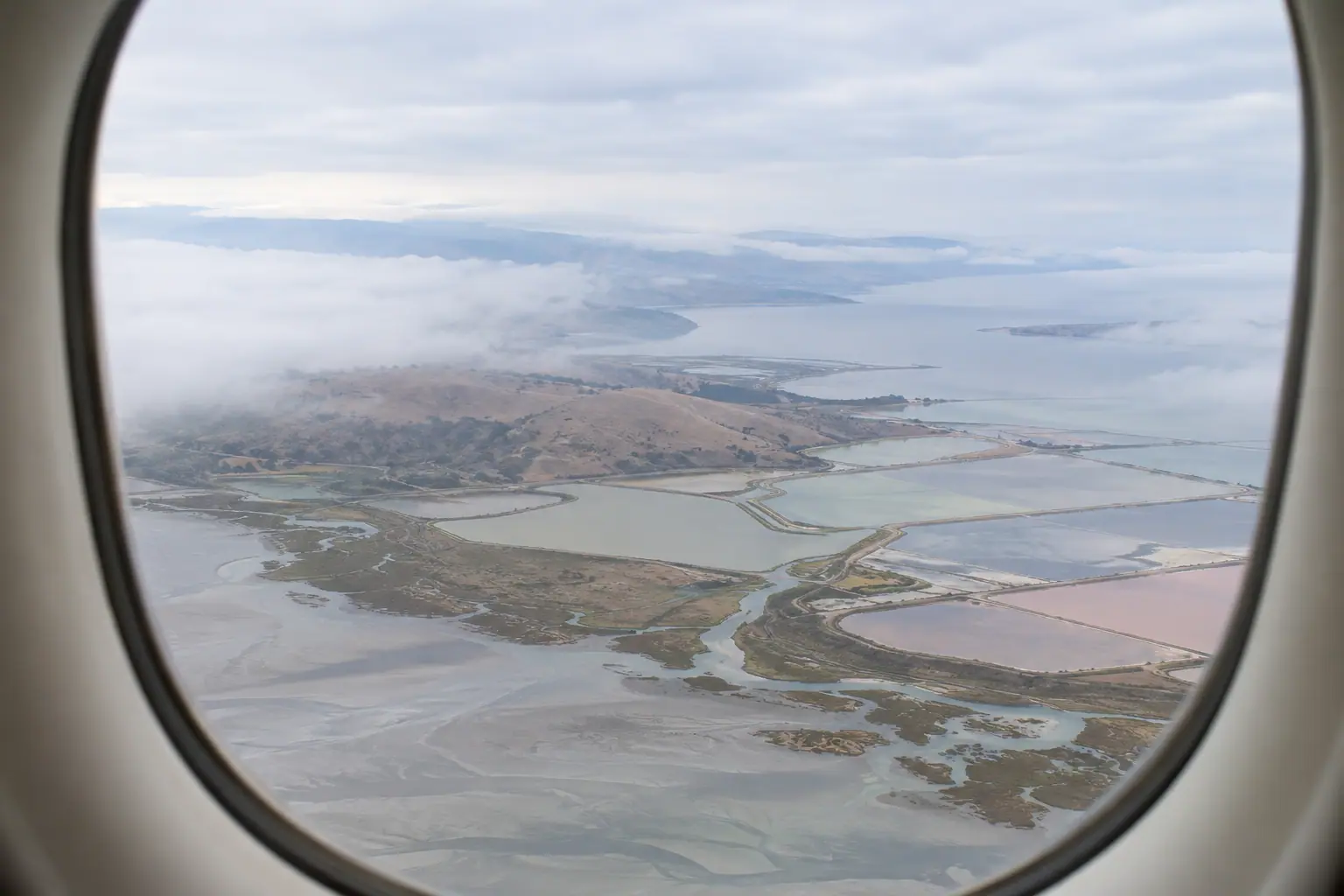
Leaving the Bay Area
FBO choice matters more than distance here. Oakland San Francisco Bay Airport has a 10,520 ft runway and Buchanan Field in Concord has 5,001 ft, and both handle the turboprops and light jets this route favors. San Francisco International is the fallback when weather or slot pressure pushes you there, with an 11,870 ft runway, though you should expect more ground congestion. Hayward Executive's 5,694 ft runway is a useful option for East Bay departures.
Every operator on your quote holds FAA Part 135 operating authority, and we arrange the trip as your agent under DOT Part 295 rules. That means the operator, not us, holds operational control of the flight. Confirm the FBO address and show time before you book, because the drive across the Bay Bridge or down the Peninsula can eat the time you saved at the airport.
Arriving in Los Angeles
Van Nuys Airport is the default for private arrivals into Los Angeles, with an 8,001 ft runway and a location that puts the San Fernando Valley, Beverly Hills and the Westside within easy reach. Hollywood Burbank offers a 6,886 ft runway and sits close to the studios and downtown. Los Angeles International handles larger aircraft and its 12,894 ft runway suits heavy jets. Pick the airport by where you are staying, not by where the aircraft parks.
On arrival you clear the FBO, not a terminal, so the walk to the car is short. If your party is splitting between Santa Monica and Pasadena, Van Nuys and Burbank split the difference differently, and that decision is worth making before you confirm the quote.
| Airport | Code | Runway |
|---|---|---|
| Van Nuys Airport | KVNY / VNY | 8,001 ft |
| Hollywood Burbank/Bob Hope Airport | KBUR / BUR | 6,886 ft |
| Los Angeles International Airport | KLAX / LAX | 12,894 ft |
| Buchanan Field | KCCR / CCR | 5,001 ft |
| San Francisco International Airport | KSFO / SFO | 11,870 ft |
| Oakland San Francisco Bay Airport | KOAK / OAK | 10,520 ft |
| Hayward Executive Airport | KHWD / HWD | 5,694 ft |
When to book private flights on this
Demand on private jet San Francisco to Los Angeles peaks on Friday afternoons out of the Bay Area and Sunday evenings back from Los Angeles, and prices follow that curve. If you need a Friday afternoon departure, then book at least a week ahead to avoid the top of the estimate band. Midweek departures and early mornings are easier to fill and usually quote closer to the low end.
Same-day round trips are common on this route, but crew duty limits shape them. A turboprop turnaround of a few hours in Los Angeles is workable; a long meeting that runs into the evening may force a different crew or a next-morning return. When your schedule is flexible, then ask about empty legs, which are repositioning flights an operator may sell below the normal estimate.
Private jet routes similar to San Francisco to Los Angeles
These 6 private jet routes span 716 to 2,386 nautical miles, with one-way turboprop estimates running from $6,000 to $33,000.
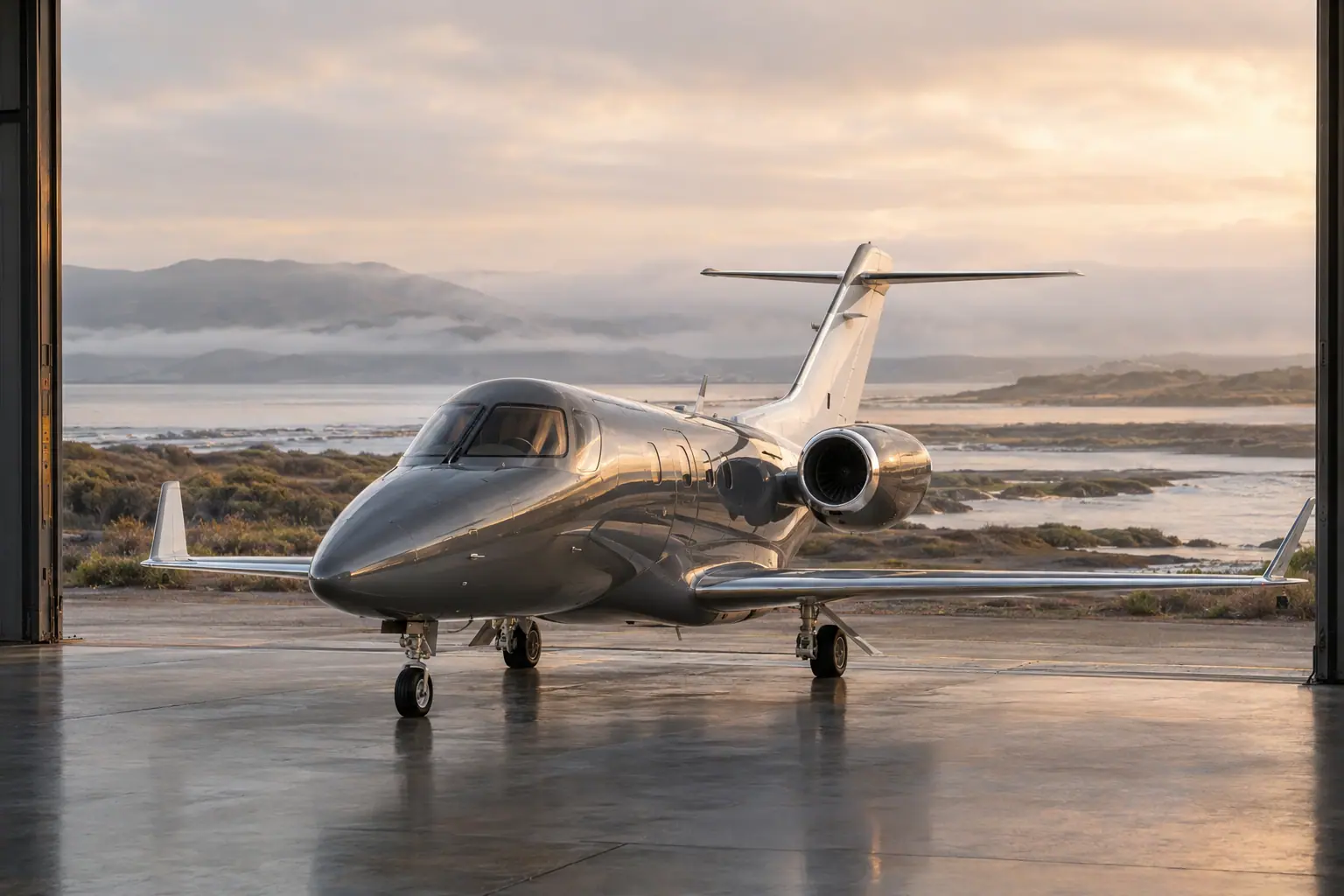
San Francisco → Aspen
- 2h 48m
- $6,000–$10,000
- 716 nm
San Francisco → Cabo San Lucas
- 4h 08m
- $9,000–$14,500
- 1,093 nm
San Francisco → New York
- 8h 46m
- $19,500–$30,500
- 2,205 nm
San Francisco → Palm Beach
- 8h 48m
- $19,500–$31,000
- 2,213 nm
San Francisco → The Hamptons
- 9h 03m
- $20,000–$31,500
- 2,284 nm
San Francisco → Nassau
- 9h 24m
- $20,500–$33,000
- 2,386 nm
This route's questions
How long is a private jet San Francisco to Los Angeles flight?
Airborne time runs about 1h 18m in a turboprop and 0h 56m in a super-midsize or heavy jet, for a 285 nautical mile leg. Door to door, the 285 nm route adds roughly half an hour of ground time at each end. That still beats a commercial trip through security and baggage claim. 328 statute miles is the road distance, not the flight distance.
What does a private jet San Francisco to Los Angeles cost in 2026?
Estimates start near $3,000 to $4,500 for a turboprop and climb to $9,500 to $14,500 for a heavy jet, each way. Light jets quote around $4,000 to $6,000 and midsize around $5,000 to $8,000. These are estimates, not quotes: the operator's final price depends on aircraft, crew and how far ahead you book.
Which airport should I use in Los Angeles?
Van Nuys is the usual choice, with an 8,001 ft runway and quick access to the Valley and Westside. Hollywood Burbank has a 6,886 ft runway and works well for studio and downtown trips. Los Angeles International suits heavy jets and its 12,894 ft runway, but expect more ground time there. If your party splits between Santa Monica and Pasadena, then Van Nuys and Burbank each save different drives.
Can I fly this route and return the same day?
Yes, and it is one of the most common patterns on this leg. Allow for crew duty limits: a short turboprop turnaround in Los Angeles fits a normal day, while a long meeting may need a different crew or a next-morning return. When a same-day return is on the table, then mention it upfront so the operator prices both legs together.
Do I need to go through TSA to fly private on this route?
No, you do not pass through a commercial security line. You meet the aircraft at the FBO and board directly. The operator still applies its own passenger vetting, and you should carry government photo identification. This is a domestic California flight, so no customs clearance applies. If you are used to TSA lines, then the FBO arrival will feel like a different airport system entirely.
How many people fit on the aircraft used here?
The Beechcraft King Air 350i seats eight in its turboprop cabin, and the Pilatus PC-12 NGX seats six. Light jets on the route typically carry six to eight. If your party is larger, the quote moves to a midsize or super-midsize aircraft, and the price with it. For eight passengers with weekend bags, then the King Air 350i covers the 285 nm leg without a fuel stop.