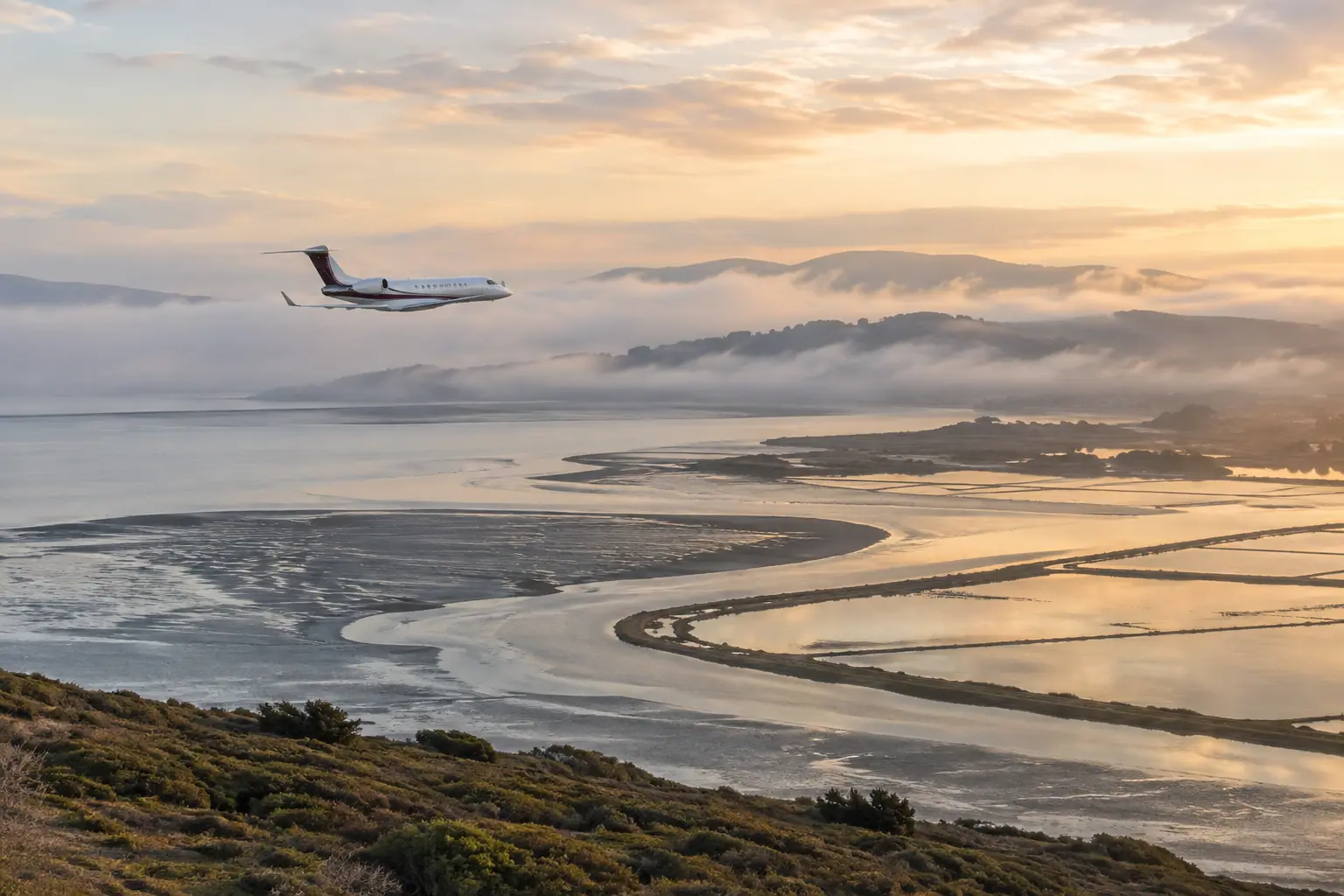
Private jet Philadelphia to San Francisco
A private jet Philadelphia to San Francisco covers 2,172 nautical miles. Super-midsize aircraft fly it nonstop in 5h 09m with fares from $37,000 to $51,500. This page covers which classes fit, where you land, and what moves the quote.
Philadelphia to San Francisco private jet prices by aircraft
A private jet flying Philadelphia to San Francisco travels 2,172 nautical miles on a super-midsize jet in 5h 09m, with an estimated one-way cost of $37,000–$51,500.The comparison below sorts aircraft by class for the full coast-to-coast distance. Times are block times for the route, not promises about your particular day, and every price is an estimate that moves with fuel, crew duty and one-way versus round-trip pairing. Two classes make the trip nonstop; the rest need a fuel stop somewhere over the middle of the country.
| Aircraft class | Flight time | One-way estimate | Notes |
|---|---|---|---|
| Turboprop | 8h 39m | $19,000–$30,500 | Stop likely |
| Light jet | 6h 21m | $24,000–$37,000 | Stop likely |
| Midsize jet | 6h 14m | $32,500–$48,500 | Stop likely |
| Super-midsize jet | 5h 09m | $37,000–$51,500 | Best fit |
| Heavy jet | 5h 09m | $49,000–$74,500 | Nonstop |
Estimates per aircraft, not per seat, excluding federal excise tax and segment fees. Time covers taxi, climb and descent.
Why a super-midsize jet fits this trip
For this distance, the super-midsize class is the honest recommendation. A Gulfstream G280 or Citation X+ has the legs to run Philadelphia to the Bay Area nonstop, and 5h 09m is the difference between a workday lost and a workday started at the hotel. Count the numbers: 3,600 nm and 3,460 nm of range against a 2,172 nm route leaves real reserve for winter headwinds and an alternate. Heavy jets also go nonstop at the same 5h 09m but price from $49,000, so most travelers only move up when the cabin count or the luggage demands it.
Light and midsize jets look tempting on the low end, and if your schedule bends, a light jet at 6h 21m with one stop can save real money. But the stop is the trade-off: an extra landing, an extra climb, and a crew day that stretches toward the limit. Turboprops technically fit the mission at 8h 39m, and I would only raise one when nothing else is available on your date. If the trip needs a flat bed and a cabin you can stand up in, the heavy jet earns its premium across five hours.
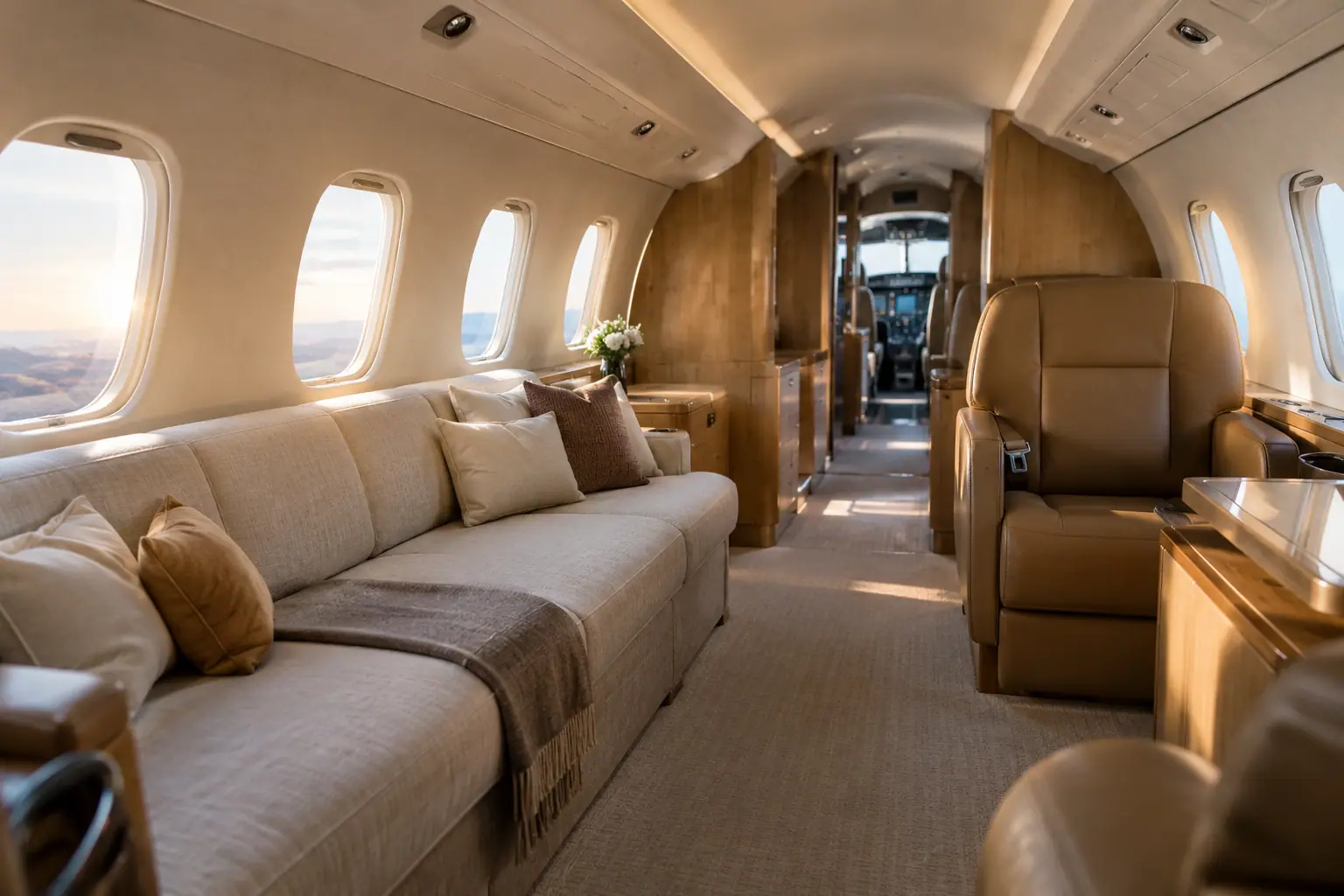
Cessna Citation X+
- 9 seats
- 527 kt cruise
- 3,460 nm range
Cabin 5 ft 8 in tall, 25 ft 2 in long. Baggage 82 cu ft.
Bombardier Challenger 350
- 10 seats
- 470 kt cruise
- 3,200 nm range
Cabin 6 ft tall, 25 ft 2 in long. Baggage 106 cu ft.
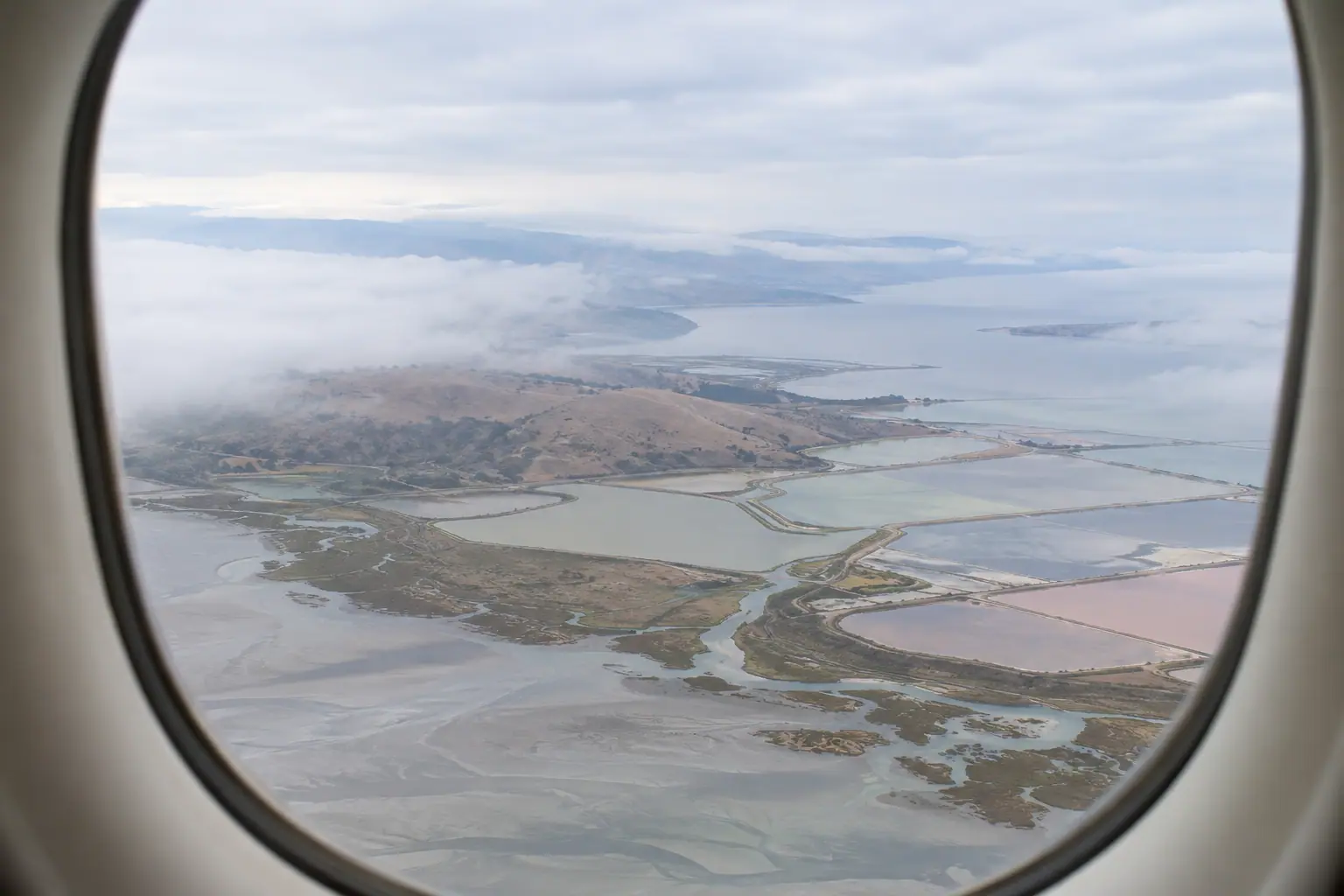
Leaving Philadelphia
Philadelphia International is the usual departure point for this route, with a 12,000 ft runway that handles anything in the fleet and airline traffic that sometimes means a slot wait. Northeast Philadelphia Airport offers a quieter curb and a 7,000 ft strip that suits light and midsize jets but not a fully fueled transcon aircraft. Choosing between PHL and PNE is really a question of aircraft size and patience.
Either way, plan to be at the FBO about twenty minutes before departure for documents and bags; the crew does the rest. If your flight is international on the far end, which this one is not, CBP would enter the picture, but for a domestic coast-to-coast leg the paperwork is light.
Arriving in the Bay Area
San Francisco International sits about 12 miles south of downtown and takes the widebody traffic, so a super-midsize arrival there is routine and the 11,870 ft runway is never the constraint. Oakland and Hayward are often faster to the East Bay and to Silicon Valley meetings depending on the bridge, and Buchanan Field in Concord serves the Diablo Valley side. Each of the four arrival airports puts you within about 400 miles of the same runway math; the real choice is which side of the bay your first meeting sits on.
Fog is the local variable. SFO runs a busy parallel approach, and a marine layer morning can stack arrivals, so an early departure from Philadelphia with an afternoon arrival usually finds better conditions than a late-evening push. If your schedule is tight, ask the operator which alternate they filed before you book.
| Airport | Code | Runway |
|---|---|---|
| Northeast Philadelphia Airport | KPNE / PNE | 7,000 ft |
| Philadelphia International Airport | KPHL / PHL | 12,000 ft |
| Buchanan Field | KCCR / CCR | 5,001 ft |
| San Francisco International Airport | KSFO / SFO | 11,870 ft |
| Oakland San Francisco Bay Airport | KOAK / OAK | 10,520 ft |
| Hayward Executive Airport | KHWD / HWD | 5,694 ft |
When demand and prices peak
Demand on this route follows the corporate calendar more than the tourist one. Monday morning departures from Philadelphia and Thursday or Friday returns out of San Francisco are the pressure points, and a super-midsize booked inside seven days on those days is where you see the top of the $37,000 to $51,500 band. Booking two to three weeks out is the single biggest lever on a coast-to-coast quote.
Fall is the busiest stretch for Bay Area business travel, with tech conferences and sales cycles crowding the calendar, and summer adds leisure demand on top. If your dates are fixed, hold the aircraft early and confirm the tail number; if they are flexible, a midweek or Saturday departure often prices softer on both ends of the route.
Private jet routes similar to Philadelphia to San Francisco
These 6 private jet routes span 1,689 to 2,308 nautical miles, with one-way super-midsize jet estimates running from $29,500 to $54,500.
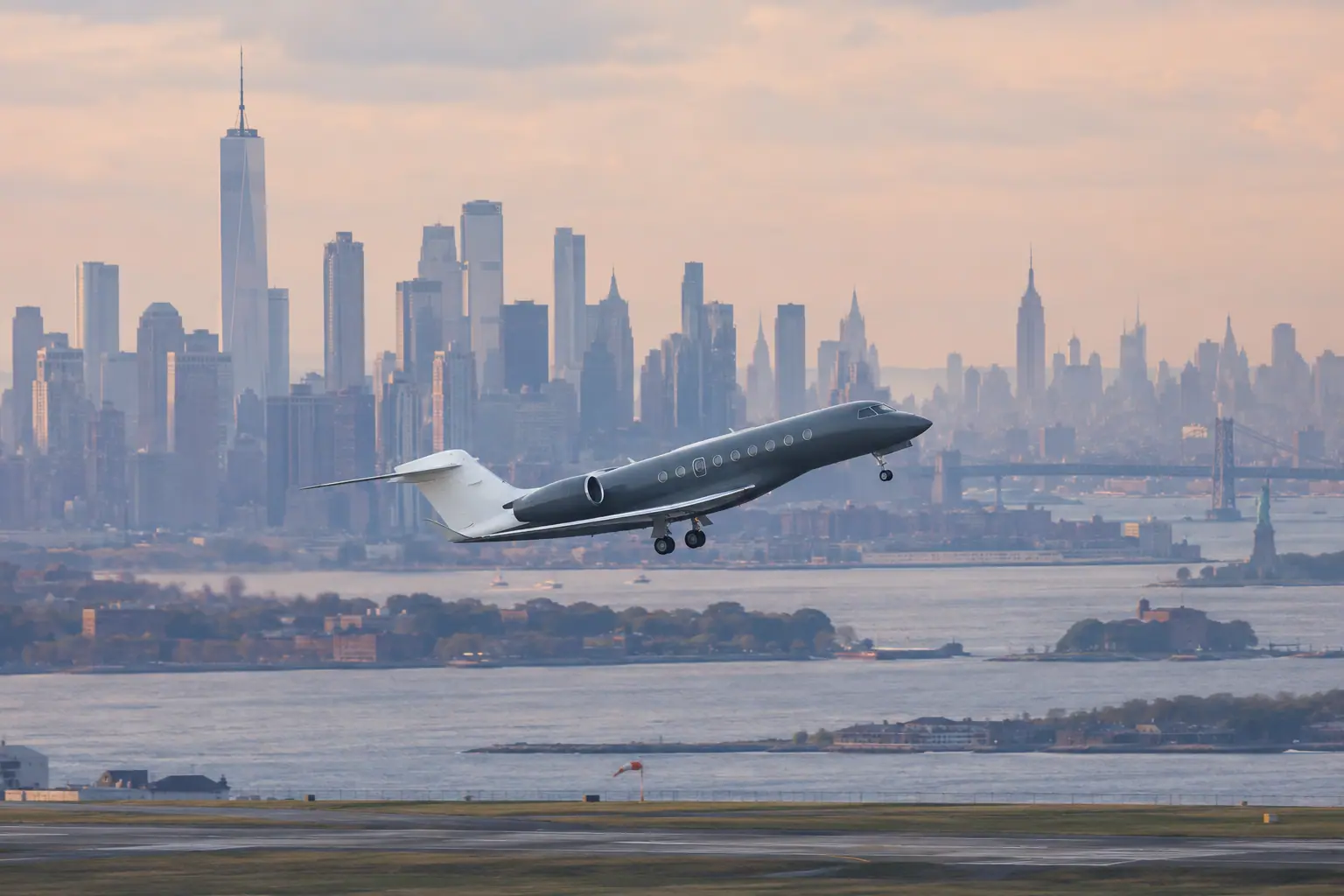
New York → San Francisco
- 5h 14m
- $37,500–$52,500
- 2,205 nm
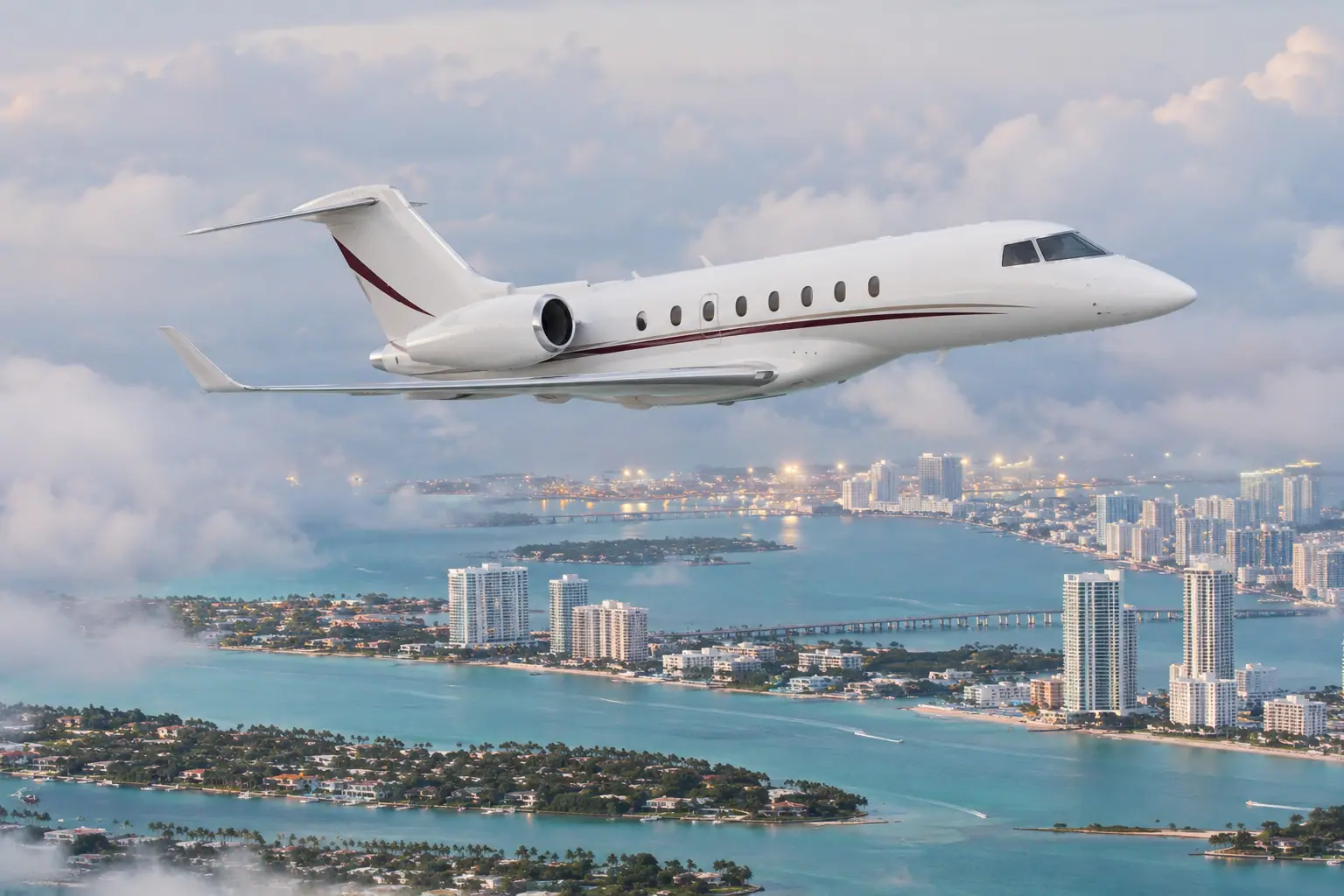
Miami → San Francisco
- 5h 17m
- $38,000–$53,000
- 2,227 nm
Washington, DC → San Francisco
- 4h 56m
- $35,500–$49,500
- 2,076 nm
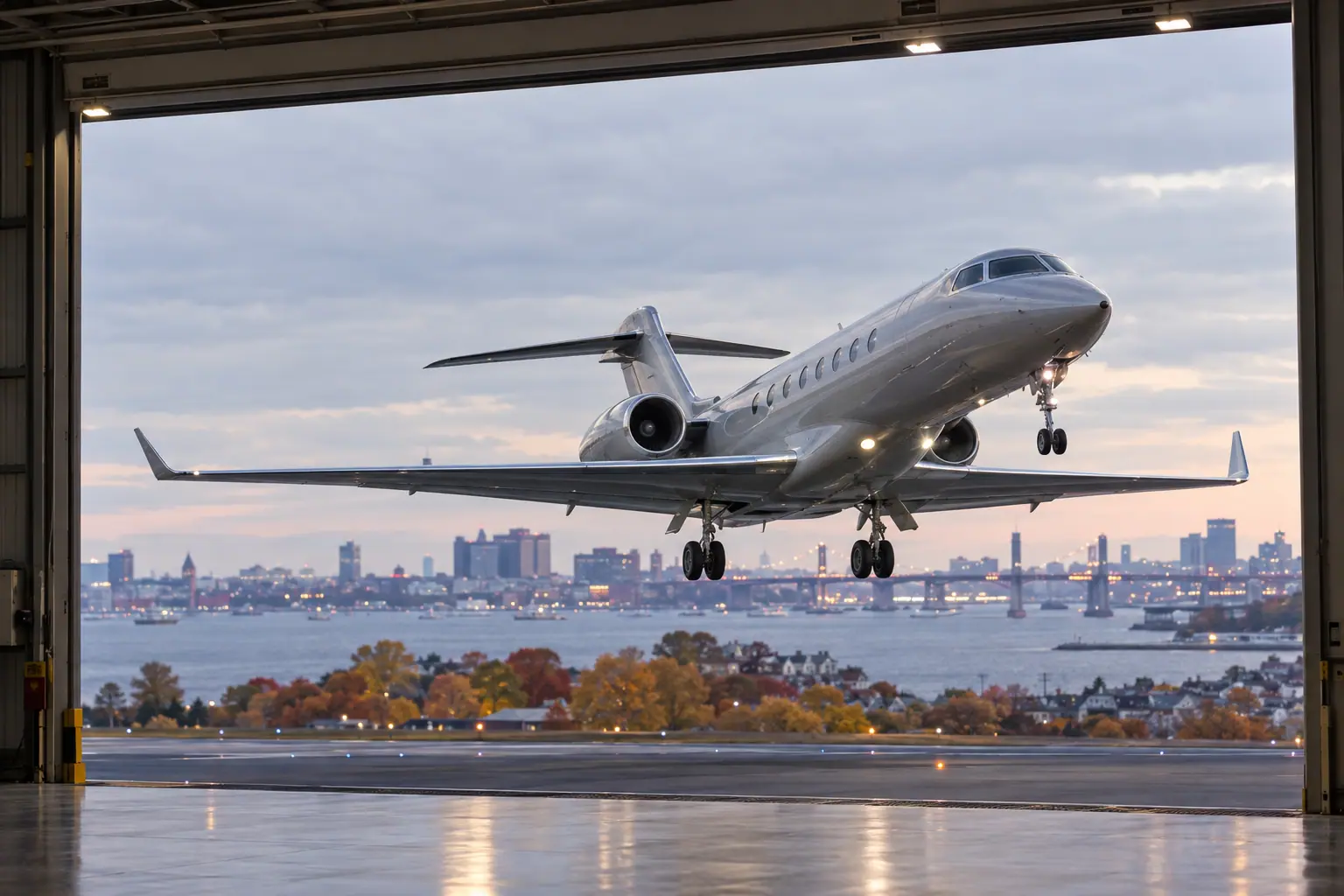
Boston → San Francisco
- 5h 27m
- $39,500–$54,500
- 2,308 nm
Atlanta → San Francisco
- 4h 25m
- $31,500–$44,000
- 1,839 nm
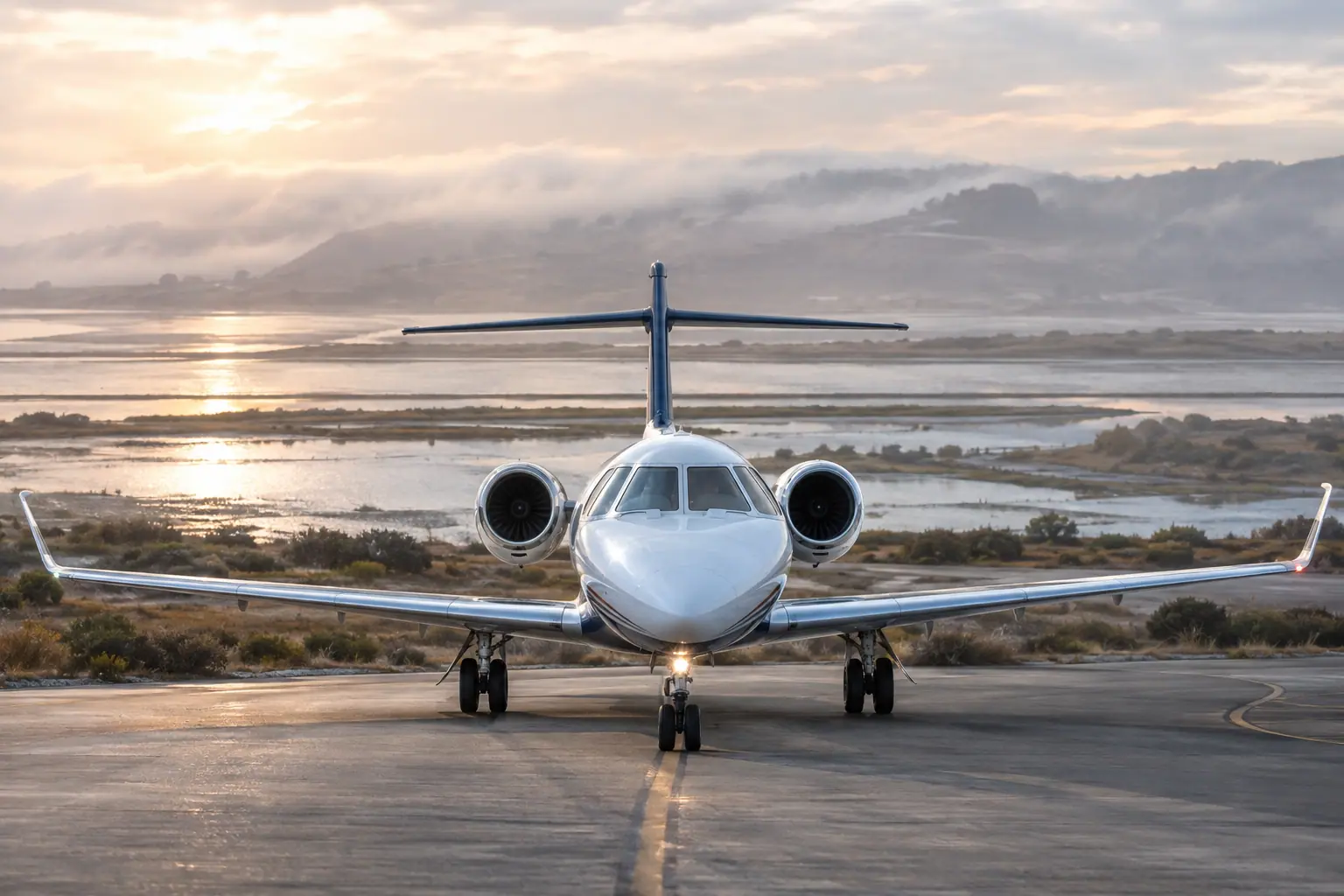
Nashville → San Francisco
- 4h 04m
- $29,500–$40,500
- 1,689 nm
This route's questions
How long is a private jet Philadelphia to San Francisco flight?
A super-midsize or heavy jet flies the route nonstop in 5h 09m of block time for 2,172 nautical miles. Light and midsize jets need one fuel stop and run 6h 21m and 6h 14m respectively, while a turboprop takes 8h 39m. Add roughly twenty minutes at each FBO for boarding and bags.
What does a private jet Philadelphia to San Francisco flight cost?
Estimates run from $37,000 to $51,500 for a super-midsize jet, and $49,000 to $74,500 for a heavy jet, both nonstop. Light jets quote $24,000 to $37,000 and midsize $32,500 to $48,500 with a stop. These are estimates; fuel, crew duty and one-way positioning move the final number.
Can I fly Philadelphia to San Francisco nonstop on a private jet?
Yes, in the super-midsize and heavy classes. The Gulfstream G280 carries 3,600 nm of range and the Citation X+ 3,460 nm against a 2,172 nm route, leaving margin for headwinds and an alternate. Lighter aircraft must stop, which is why the nonstop ranks are the ones brokers quote first.
Which San Francisco airport will my jet use?
Most transcon arrivals go to San Francisco International, whose 11,870 ft runway takes any class without payload limits. Oakland and Hayward suit East Bay and Peninsula meetings, and Buchanan Field in Concord handles the Diablo Valley side. Your first meeting location should decide it, not runway length.
Do I need to book ahead for the private jet Philadelphia to San Francisco route?
Book two to three weeks ahead when you can. Monday departures from Philadelphia and Thursday or Friday returns from San Francisco are the peak, and inside seven days on those days you are quoting at the top of the $37,000 to $51,500 band. Flexible midweek dates price softer.
Who operates the aircraft on a charter like this?
The flight is flown by an FAA Part 135 operator that holds operational control, and the broker you book through arranges it as your agent under DOT Part 295 rules. That means the operator's certificate, crew and maintenance records govern the flight, and you should ask for the operator name before you sign.